What is an MVP and what is it for?
Let's start with the definition of minimum viable product. MVP stands for Minimum Viable Product and it's the very first, super basic version of a product that allows a team to collect as much data as possible with the least effort possible.
The product is Minimum and Viable because it's not the complete final product, but a minimal version that includes only the functionalities needed to satisfy customers.
The MVP is used to collect market data and feedback with the intention of using them to improve the final product we have in mind. In fact, using an MVP is the fastest and most cost-effective way to validate our product, service, or idea.
On the contrary, if we develop the full product directly instead of a minimum viable version, we risk spending time, resources, and money on something the market won't support: in short, the MVP allows us to reduce risks and optimize efforts. Thanks to the MVP, we can also test product variants, launch two different versions with an A/B test, and see which one performs better — something a fully developed product wouldn't allow quickly and economically.
How to build an MVP?
Now that we know what a minimum viable product is and what it's used for, we can think about building one. To do so, we must make sure it meets these 4 essential characteristics:
- The main characteristic of a minimum viable product is undoubtedly value. The first users who will use the MVP must understand in a simple and direct way what the value of the product or service they're using is. If the MVP has no value, it won't convert into sales, which is why we must place value at the center of the MVP.
- The second characteristic is sellability. An MVP must convey a value for which people are willing to pay out of pocket to receive the benefits of the product they're testing.
- The MVP must not focus only on the product, but on the process. As we said, the MVP is just a minimal version of a product — full product development comes later. With the MVP, we want to analyze the entire process, which is much more important. By process we mean, for example, the user's purchase flow, any problems the user encounters in their experience with our MVP, etc.
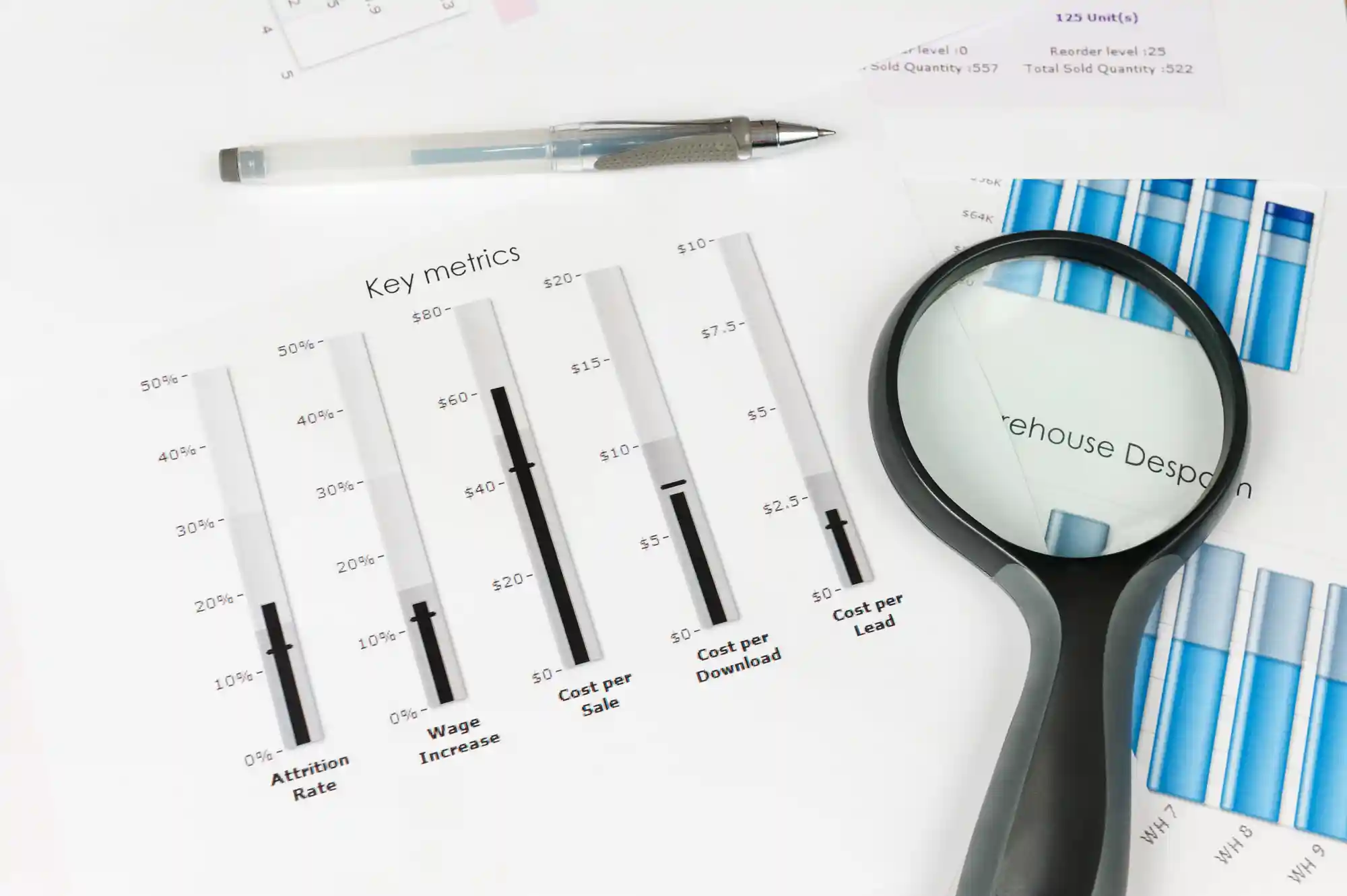
- When creating an MVP, we must choose an objective measurable metric to determine the success of the test we are running. Of course the MVP allows us to monitor many data points, but before launching it, it's essential to choose which one will be the most important (in English this is defined as OMTM: One Metric That Matters)
Practical MVP examples
Now let's look at some MVP examples.
Video demo
A first example of MVP is a video demo, which is simply a video that explains the problem your product will solve and introduces its functionality.
Smoke test
Smoke tests, also known as "Landing page MVP", are an essential tool in the growth methodology.
A complete landing page is created detailing the product's features, including a download button and other essential elements, all with the goal of clearly communicating the value proposition. This strategy allows you to evaluate real market interest before investing significant resources in the product's full development.
If you'd like to learn more about the topic, I invite you to read my detailed article on the smoke test. Also, if you're interested in more intensive training, I recommend my 1-hour masterclass on the smoke test.
Crowdfunding
Crowdfunding is the most popular type of MVP in recent years, as you get money before making a product — it's a way to validate the idea and take pre-orders, thus obtaining funding for production.
There are also some more structured examples like concierge and Wizard of Oz MVPs, but it's not important to focus on them right now.
Would you like to know more about MVP? Visit my online school's website, where you'll find material on MVP and other similar topics related to creating and growing a business.