Prioritization techniques such as the priority matrix, MoSCoW, and other prioritization methods can be used to accurately evaluate and determine which tasks are most important for a project and should receive priority. In addition, prioritization techniques help maximize effectiveness by allowing resources to be allocated efficiently to achieve desired outcomes.
In short, the correct use of prioritization techniques is a tool that helps ensure projects are completed on time and within budget.
Why is it important to prioritize tasks, functions, and activities in a project?
Setting priorities is an important step when organizing projects or activities, as it helps ensure that the highest-priority tasks, functions, and project elements are carried out first, and that less important or deferrable ones are done later.
This can be done in several ways, such as using a prioritization matrix, the MoSCoW technique (Must have, Should have, Could have, and Won't have), or other prioritization methods. Additionally, user stories can help prioritize by breaking tasks into smaller pieces and assigning them a relative importance. This helps create structure and clarity for completing projects on time. In conclusion, using prioritization techniques in projects is key to effective time management and successful task completion.
What are the prioritization techniques?
If you want to learn how to prioritize, it's important to know at least one effective prioritization technique. The most well-known are:
- The Impact-Effort Prioritization Matrix
- MoSCoW
The Prioritization Matrix
What is the prioritization matrix?
The prioritization matrix is one of the most useful prioritization techniques in problem-solving and project management. This matrix allows companies and professionals to classify and rank tasks or problems based on, for example, their urgency and importance, making it easier to make decisions and allocate resources.
It works on the principle that not all tasks have the same relevance, and it's essential to identify which ones require immediate attention and which can wait — making it an essential tool within prioritization techniques.
There are several examples of prioritization matrices, which are very common prioritization techniques. Here are the most common ones.
The one I use: the Impact-Urgency Matrix
In my work as a growth marketer, I use the Impact-Urgency Matrix, one of the most effective prioritization techniques. This matrix is structured around four quadrants based on level of impact (high or low) and degree of urgency (high or low):
- High impact, high urgency: These tasks or projects are critical and must be addressed immediately.
- High impact, low urgency: These are important tasks or projects that can be scheduled for later, but should not be ignored.
- Low impact, high urgency: These tasks or projects need to be done quickly, but don't have a major impact on outcomes.
- Low impact, low urgency: These tasks or projects are the least priority and can be postponed or even delegated.
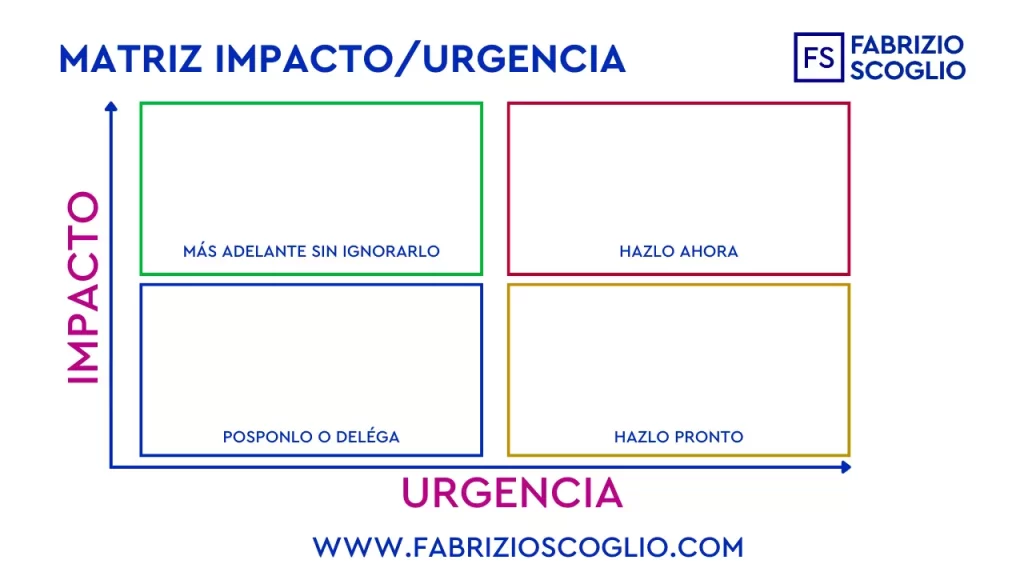
I assign each task or project an impact and urgency value, then place them in the corresponding quadrant. This practice lets me draw clear distinctions between quick tasks and more complex ones, which is essential for optimizing performance and improving sales quickly and effectively.
In my online business growth club, I show how I use this matrix alongside my custom task management model. If you're interested in gaining valuable knowledge to drive your business forward with minimal time investment and connecting with other professionals who, like you, are looking to improve and grow in their field, I invite you to take a look.
The Eisenhower Matrix
The Eisenhower Matrix is a management tool that helps determine the urgency and importance of tasks. It consists of four quadrants:
- Important and urgent.
- Important but not urgent.
- Not important but urgent.
- Not important and not urgent.
This matrix is especially useful in situations where efficient time management is critical. For example, it can be used by professionals who have to deal with a large number of tasks and need to determine which ones must be addressed immediately and which can be scheduled for later.
The Impact-Effort Matrix
The Impact-Effort Matrix allows you to prioritize tasks or projects based on the impact they will have on outcomes and the effort required to carry them out. This matrix is divided into four quadrants based on high or low scores for impact and effort:
- High impact and low effort.
- High impact and high effort.
- Low impact and low effort.
- Low impact and high effort.
This technique works relatively well as it's easy to apply:
- Start by listing all tasks on a sheet of paper or in a spreadsheet.
- Assign each task a numerical value for both impact and effort: higher numbers indicate higher levels of importance or difficulty.
- Finally, create a chart reflecting your scores for each task so you can easily compare them. This will help you decide which tasks are most important and which you can leave for later.
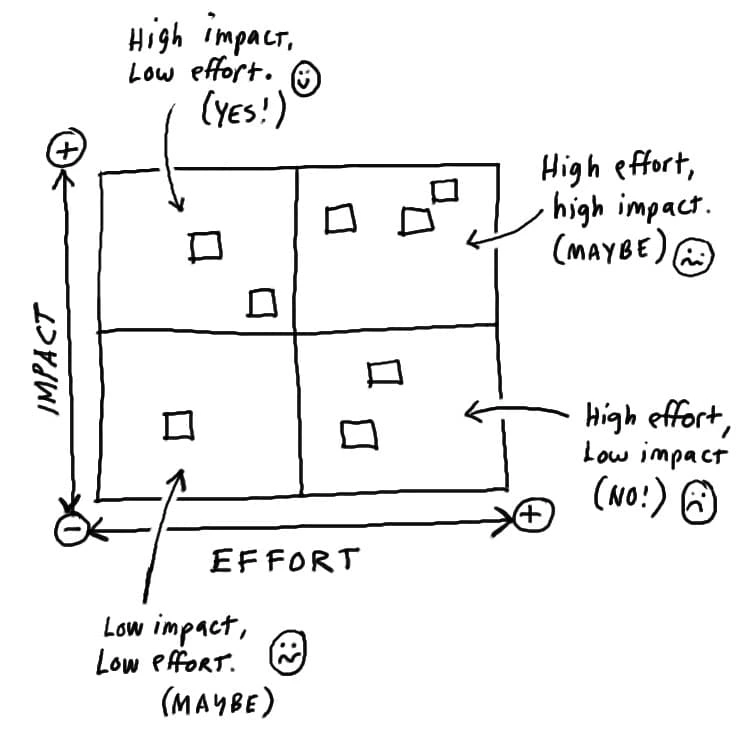
This matrix is ideal for situations where you need to balance available resources with the potential impact of actions.
The Risk-Benefit Matrix
The Risk-Benefit Matrix helps prioritize tasks based on the benefit they'll provide and the risk associated with implementing them. It's structured around four quadrants based on high or low scores for benefits and risks:
- High benefit and low risk
- High benefit and high risk
- Low benefit and low risk
- Low benefit and high risk.
This matrix is especially useful in project management when you need to weigh the potential return of an action against possible risks.
The Value-Complexity Matrix
The Value-Complexity Matrix is useful for companies looking to improve their sales and optimize their performance. In this matrix, tasks or projects that deliver high value but have low complexity are the most prioritized. It's divided into four quadrants:
- High value and low complexity
- High value and high complexity
- Low value and low complexity
- Low value and high complexity
It's ideal for companies looking to maximize the value they get from their projects with the least complexity possible.
How to prioritize with MoSCoW?
MoSCoW is one of the most widely used prioritization techniques for setting priorities. It stands for Must, Should, Could, and Won't.
When using MoSCoW, each item must be classified into one of four categories:
- Must. These are the essential items, the most important ones, and should have priority when allocating resources.
- Should. "Should have" items are higher priority than "could have" or "won't have", but not as important as "must have".
- Could. "Could have" items rank lower on the list and can be deferred if necessary.
- Won't. Finally, items that won't be addressed are those that will not be dealt with at this time and should therefore receive no attention.
Prioritizing with MoSCoW is relatively straightforward, but can quickly become complex depending on the number of items being prioritized. Using an Excel spreadsheet or other software is an effective way to track everything and ensure each item falls into its appropriate category. With MoSCoW, you can easily prioritize your task list to know which ones to focus on first to get the most out of your resources and efforts.
Pros and cons of the MoSCoW model
The MoSCoW model, by organizing tasks into these four categories, allows managers to better understand project needs and which tasks are crucial to complete first. This method gives teams the flexibility needed to adjust their plans based on needs, while still ensuring they meet desired goals. It can be a great tool for effective project management when used correctly.
- The pros of this model are structuring, managing expectations, and clarity about what needs to be done first.
- The cons include the difficulty of assigning tasks to each category or determining which tasks can be deferred.
Create your own model and share it with me
As we've seen in this article, developing a personalized system can be an excellent way to meet your specific needs and achieve your growth objectives more effectively.
If you feel the need to review your company's priorities and implement one of the prioritization techniques from this article in a concrete way, I'm at your disposal. I offer a growth coaching service where, among other things, I train teams to work with prioritization techniques.
I also have a business growth club where we discuss all topics related to growth — whether growth hacking, growth marketing, or business growth in general. It's a great place to share ideas, ask questions, and learn from other professionals in the field.
Remember, growth is a journey, and we all have something to contribute. I look forward to learning from your experiences!
Amuní!
Fabri